In this way, a company may be able to extend the practical protection of an invention, even though the original patent itself cannot be revived.
Technical Feasibility and Market Adoption
The more advanced an invention is, the harder it is to predict when society will accept it.
Fully autonomous vehicles, space elevators, myoelectric prosthetic hands, flying cars, and data banks are often said to be technically possible. However, many technical, economic, legal, and social problems must still be solved before these technologies can become widely used.
An invention may be patentable if it is technically feasible, even if it still faces social or commercial problems.
However, the term of a patent is generally 20 years from the filing date. The patent may therefore expire before the invention becomes a successful business.
For example, a company may obtain a patent for a space elevator technology. If construction of a space elevator does not begin within the patent term, the patent may never produce commercial value.
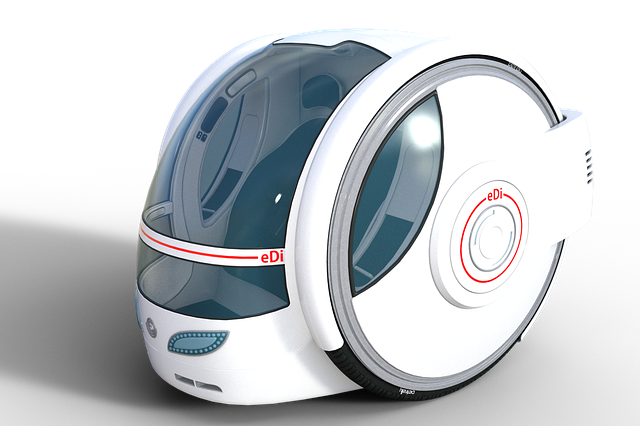
Technical feasibility may be enough to obtain a patent. However, a patent will not become highly valuable unless the invention is actually adopted by the market.
Developing an Improvement to the Original Invention
Suppose that you obtained a patent for an advanced invention, but the patent expired before the market was ready for the invention. You may still believe that society will soon accept the technology.
You may want to obtain the same patent again. However, the same invention cannot normally be patented twice.
Even so, you may be able to give practical new life to the expired patent by reviewing and improving the original invention.
Suppose an inventor S, develops invention A1 and obtains patent P1.
Invention A1 is far ahead of its time. Patent P1 expires before invention A1 is widely adopted.
In this situation, inventor S can consider what additional technology would be essential to put invention A1 into practical use. Through this review, inventor S develops invention A2 as an essential supporting technology for A1.
Inventor S then files a patent application for the combination of A1 and A2.
Because A1 is highly advanced, inventor S may be one of the leading experts in this technical field. Other people may not yet understand the practical problems of A1. They may therefore be unlikely to develop A2 as a solution to those problems.
For this reason, the combination of A1 and A2 may also be patentable as a new and non-obvious invention.
If A2 is essential for the practical use of A1, new patent P2 may have almost the same commercial value as old patent P1.
Patent P2 may therefore extend the period during which inventor S can control the practical use of invention A1.
In this sense, patent P2 can be viewed as a new version—or a practical revival—of patent P1.
Extending Patent Protection with a Safety Feature
Let us consider a specific example.
Suppose inventor S discovers that the properties of alloy X change when an electric current passes through it.
The properties of alloy X change further as more electrical energy is supplied.
Inventor S develops an electric circuit that passes current through alloy X. This is invention A1. Inventor S obtains patent P1 for the invention.
Patent P1 may provide broad protection for the engineering possibilities created by the discovery that electrical current changes the properties of alloy X.
However, invention A1 does not become widely used because of cost or other practical problems. Patent P1 expires before the invention reaches the market.
Inventor S later discovers that alloy X generates heat when an electric current passes through it. Supplying an unlimited current could therefore be dangerous.
To solve this problem, inventor S develops a safety device that limits the amount of current supplied to alloy X. This is invention A2.
Inventor S then files a patent application for the combination of A1 and A2.
Very few people may be studying what happens when an electric current passes through alloy X. Other researchers may not yet recognize the safety problem. The combination of A1 and A2 may therefore have a good chance of being patented.
An important part of this invention is the recognition that special care is necessary when current is supplied to alloy X. Identifying a previously unknown problem can lead to a patentable solution.
Inventor S obtains patent P2 for an electric circuit that supplies current to alloy X and includes the safety function.
In practice, it would be difficult to use such a circuit without a safety device. Patent P2 may therefore cover most practical uses of the original discovery, even though patent P1 has expired.
The original patent has not legally been revived. However, the new improvement patent may provide commercially similar protection.
Protecting an Invention for a Longer Period
In general, it is more difficult to obtain a patent in a technical field that attracts many researchers and companies. Many related technologies may already have been published or patented.
By contrast, it may be easier to obtain patents in a less popular technical field. There may be fewer prior-art documents and fewer competing researchers. This can create more opportunities to patent later improvements.
Advanced inventions also tend to have unresolved problems that must be solved before commercialization. Each problem may contain the seed of a new invention.
Possible improvements may include:
・safety features;
・cost-reduction technologies;
・control systems;
・energy-saving features;
・durability improvements;
・installation or maintenance methods; and
・technologies needed to comply with laws or industry standards.
A patent strategy should therefore consider not only the original invention, but also the technologies that will become necessary when the invention is put into practical use.
New inventions do not always come from creating something completely different. They can also come from revisiting an old invention, identifying its practical problems, and developing the technologies needed to solve them.